… MSMD yielded over $2.1 billion investments recently
Nigeria now issues no mining licence without a plan for a local processing plant. This policy, according to the Federal Ministry of Solid Minerals Development, has yielded over $2.1 billion investments in recent times.
The ministry disclosed this in a statement while preparing to convene global investors in Abuja for the maiden Nigeria NOW! launch.
It stated: “The rule has been applied consistently and the investment following it includes a $1.3 billion partnership with the Africa Finance Corporation covering an alumina refinery, geological mapping and exploration support, a $600 million lithium processing plant near the Kaduna-Niger border, and a $200 million lithium refinery outside Abuja.”
The ministry said four Nigerian ministries are ready to participate at forum slated for 19 and 20 November at the Bola Ahmed Tinubu International Conference Centre, under the patronage of the Minister of Solid Minerals Development, Dr Dele Alake.
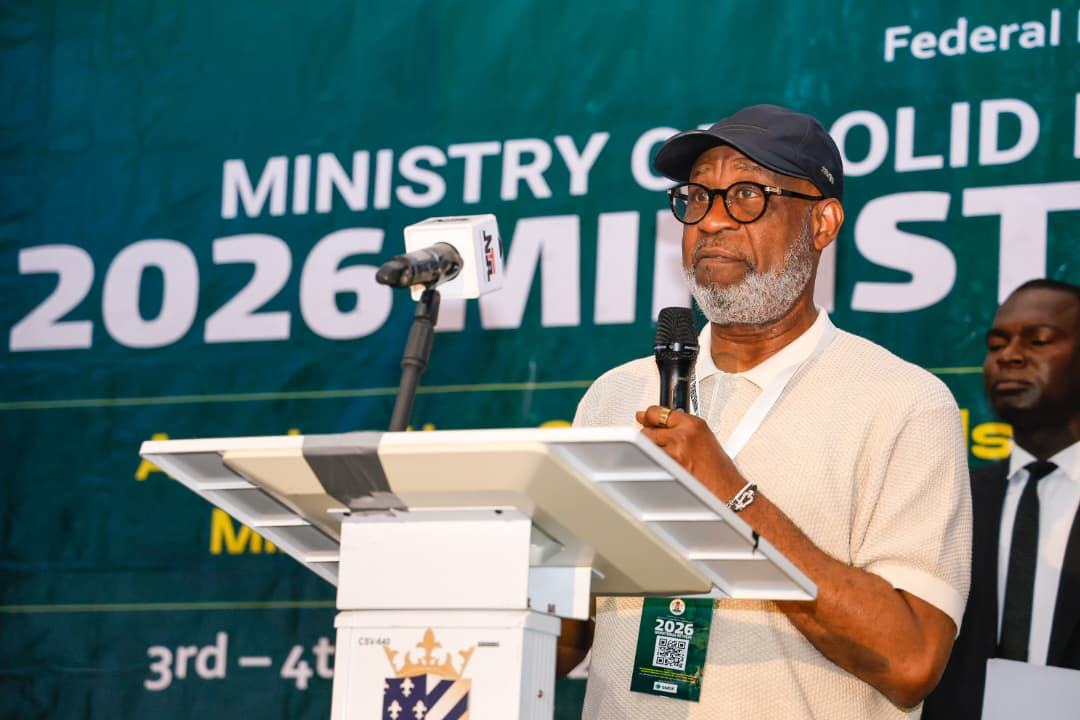
Speaking at the launch through Engr. Obadiah Simon Nkom, Director-General of the Mining Cadastre Office, Dr Alake set out why four ministries participate rather than one, saying infrastructure, licensing, financing, technology, security and market access fall across several mandates, and no single ministry can answer an investor’s questions on all of them.
“The first working demonstration is already running. A lithium plant at Endo in Nasarawa State, commissioned on 2 July, processes 6,000 tonnes of ore a day on around $250 million of investment. Sector revenue reached over N38 billion in 2024 against N6 billion the previous year. A memorandum signed with Türkiye in May covers exploration, technology transfer, digitalisation and training, and the Solid Minerals Development Fund began awarding exploration grants in July under its new EMERGE endowment.
“Nigeria’s power sector is moving on the same principle of decentralised decision-making. Two years into the Electricity Act 2023, the Nigerian Electricity Regulatory Commission has transferred regulatory oversight to sixteen subnational commissions, giving states authority over their own electricity markets for the first time. The Nigerian Sovereign Investment Authority has put domestic capital behind distributed renewable energy, and industrial self-supply has reached 200MW, with a steel plant among the projects breaking ground against it,” the ministry stated.
Alake’s own formulation is that the days of exporting raw minerals from pit to port are over.
Nigeria NOW! brings government, investors, project developers, financial institutions and development partners together around three sectors, energy, infrastructure and mining, with a focus on projects, capital and partnerships rather than announcements alone. The programme runs across two days at the Bola Ahmed Tinubu International Conference Centre in Abuja.
“This is the first Nigeria NOW! held in Nigeria, and the Ministry’s commitment to stay involved through the preparatory period is what makes it different from a conference that arrives and leaves,” said Abdoulaye Sylla, Portfolio Manager and Head of Corporate Development at EnergyNet.