

Coal: A fuel essential to a sustainable future
23 January 2026
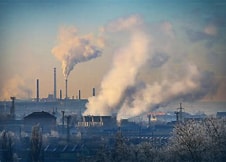
In the run-up to Investing in Mining Indaba, Chris Meyer interviewed Prof Nicole Wagner about comments made at last year’s conference about coal, a commodity shaping up to be a topic of discussion again in 2026.
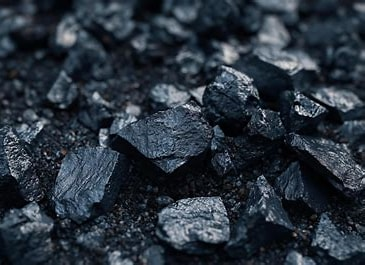
Energy Economist Dr Lars Schernikau makes a thought-provoking statement when he asks: ‘Should we divest from coal and gas to make electricity less reliable and more expensive, or should we rather invest in these to make electricity generation more efficient, cleaner, and more reliable?’ “
It was as if the Minister of Energy, Gwede Mantashe were replying to this question in the Mining Indaba held in Cape Town at the beginning of 2025, which I attended. In his presentation, he refused to commit himself, or the government, for or against the building of new, more modern coal-fired power stations.
Minister of Mineral and Petroleum Resources Gwede Mantashe explaining his stance on building coal-powered power stations at Investing in Mining Indaba 2025
What the Minister was effectively saying was that he had still not ruled out HELE (High Efficiency Low Emission) coal-fired power stations and other more modern, efficient coal conversion processes, such as circulating fluidised-bed combustion, as part of our energy future.
Promoting sustainable coal stewardship
Professor Nicola Wagner
Without a doubt, one of the most important speakers at the Indaba was Michelle Manook, the Chief Executive of FutureCoal, the international body promoting sustainable coal stewardship and responsible use. While her key points are made in full in Roadmap for a sustainable coal value chain, some of the more important are captured below, and as raised during the Mining Indaba panel discussion held on the Disruptors Stage.
The first is that “Advanced coal power technologies are often overlooked as a potential solution for reducing CO2 emissions. For example, upgrading old and inefficient fossil fuel power plants to High Efficiency and Low-Emission (HELE) plants can reduce emissions by 20–40%.”
Extrapolating this point, “The advancement and deployment of coal abatement technologies, including HELE plants, carbon capture and storage, and biomass co-firing, can abate up to 99% of coal pollutants.”
Thirdly, “The path to a sustainable energy future must be inclusive, considering all energy sources and their potential for improvement. After all, sustainability is not just about using renewable resources; it’s also about making the most of what we have most efficiently.”
And “The funding for installing more intermittent energy sources and closing coal plants capable of providing baseload power could worsen South Africa’s energy issues.”
The role of coal in the energy mix
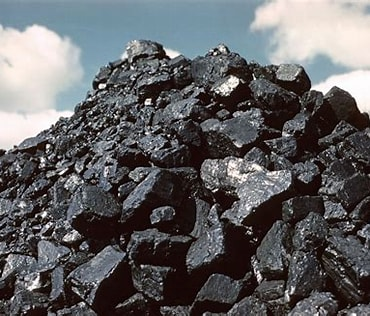
Put another way, it is not about coal or nuclear or hydropower or solar or wind energy, it’s about coal AND nuclear AND hydropower AND solar AND wind energy. The firm conclusion drawn by the Mining Indaba panel Coal and uranium: And renewables! What is the ‘sweet spot’ energy mix?, with representation from Standard Bank (energy financier), the DMRE (government), Sereti (coal and renewable industry), FutureCoal, and academia (myself), was that baseload power (coal and nuclear) are required, as well as renewable energy.
The different energy sources all have a place in the immediate, mid- and long-term future electricity requirements, with a gradual shift away from fossil fuels required as resources are depleted. We are yet to find a satisfactory replacement for coal-based power.
Manook highlighted a crucial issue: the Levelised Cost of Electricity (LCOE) metric is inadequate for comparing renewables with coal and other base-load electricity sources like nuclear, as it fails to account for the full costs of making intermittent renewable energy dispatchable.
Of interest Eskom, ferrochrome sector look to keep lid on energy pricing
Increasingly, the general public, financial institutions, and governments are realising that coal mining is not just a nuisance from which we need to move away. In addition to providing 34% of global electricity generation, coal is essential to other key industries. Steel, aluminium and cement are just three of them. In other words, if we shut down our coal mines, we will also detrimentally hinder steel, cement, synthetic fuel production, and a host of other products we have come to take for granted, including plastics and even toothpaste.
Fly ash and other waste material
And coal ash, previously thought of as a hazardous waste product from coal combustion, is increasingly being considered as a valuable resource. Coal and coal ash contain rare earth elements, which have the potential to be extracted, purified and used instead of mining new rare earth deposits. Two of these elements, neodymium and praseodymium, are essential for making the powerful magnets essential for generating electricity by wind turbines.
And, because rare-earths can be extracted from coal ash and other waste materials, more attention is now being given to advancing these processes, especially those being developed by Mintek.
Did you know? What is the coal demand & supply situation in Africa?
One successful example of mine waste utilisation being undertaken is by Rainbow Rare Earths in Phalaborwa, where processes developed in collaboration with Mintek and others will make possible the extraction of 150,000 tonnes of four of the world’s most sought-after rare-earths. This may be of interest to President Donald Trump in the current debate about US imports from South Africa.
Coal ash is itself a valuable resource, and has been used for many years as a cement extender. Currently, Eskom is leading the way in sustainable practices by incorporating recycled legacy coal ash into road construction at its Kusile Power Station in Mpumalanga. This innovative initiative, launched by Eskom Rotek Industries (ERI), aims to enhance operational efficiency while reinforcing Eskom’s commitment to sustainability.
Without coal combustion facilities, coal ash cannot be produced, thus removing the commodity source for many crucial and developing industries. In an ironic turn of events, Portugal, for example, is importing fly ash to keep its cement industry going as all coal-fired electricity production has halted in that country.
Of interest Lessons underway at Eskom coal plant repurposing project
What next for coal as a resource in South Africa?
Research done in South Africa has shown intriguing possibilities, like producing graphene and hi-tech building materials from what are presently considered discard coal. There is an urgent need to characterise the million tons of discard coal in the Mpumalanga Province, for example, and universities are delving into this important research area.
We need to change our mindset. Coal is not the enemy, and coal and its by-products find many important applications in our current and future world. We must see it as a valuable resource; a resource from which valuable new products can be developed that will create new industries, more jobs, and help us meet the challenges of tomorrow.
=ESI AFRICA=