Skip to content
December 23, 2025
The United States has expressed willingness to cooperate with India in the nuclear energy sector as Asia’s second-largest economy opens its civil nuclear industry to private investment and foreign participation.
“We welcome India’s new step towards a stronger energy security partnership and peaceful civil nuclear cooperation,” according to a post on X of the official account of the United State. Embassy in India.
“The United States stands ready to undertake joint innovation and R&D in the energy sector,” the embassy said.
India’s Parliament last week passed the so-called Sustainable Harnessing and Advancement of Nuclear Energy for Transforming India (SHANTI) Bill, which opens the Indian nuclear energy sector to private investment and ends more than six decades of state monopoly.
Indian President Droupadi Murmu endorsed on Monday the bill, which repeals the Atomic Energy Act of 1962 and the Civil Liability for Nuclear Damage Act of 2010, which had hindered growth in India’s civil nuclear industry.
India expects the landmark legislation to drive investments from private companies in its nuclear energy sector.
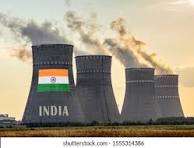
India’s Nuclear Energy Mission targets 100 gigawatts (GW) of nuclear power capacity by 2047 “through deployment of existing and emerging advanced nuclear technologies, both indigenous & with foreign cooperation.”
Currently, India has just 8.8 GW of operating nuclear capacity, operated by state-owned Nuclear Power Corporation of India Limited (NPCIL).
Hiking nuclear power capacity tenfold by 2047 would need a lot of investment, including from private firms, the government and various experts say.
Earlier this year, a panel set up by India’s power ministry said in a report that India’s goal to have 100 GW nuclear power capacity by 2047 would require as much as 19.28 trillion Indian rupees, or $214 billion at current exchange rates, of cumulative capital.
“Substantial technical and financial resources will be required for accelerated deployment of 100 GW of nuclear capacity by 2047,” the panel said.
“The private sector has abundant capital, and inherent efficiency in timely construction and innovation adaption.”
Oilprice.com …except images