Shettima inaugurates the new head office of NELMCO in Asokoro District, Abuja


Outcome of what will fuel the grid in 2030 is still uncertain
…Peculiarities to the world and why
GRID OUTCOME: AI’s escalating demand for energy has prompted tech companies to aggressively explore alternative energy sources, driving significant investments into fusion and fission innovations.
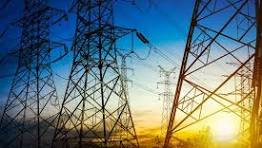
For many, natural gas remains the go-to solution for consistent, 24/7 baseload power due to its reliability, affordability, and widespread availability.
However, recent geopolitical instability in the Middle East has revealed vulnerabilities in the natural gas supply chain. The disruption caused by Iranian drone strikes on Qatar’s natural gas infrastructure—one of the world’s largest exporters—underscored these risks.
Further strain is the surging demand for gas turbines, which has left manufacturers unable to fulfil new orders until the early 2030s. These bottlenecks present challenges not only for tech companies reliant on natural gas but also for the industry itself. Currently, 40% of natural gas consumed in the U.S. is used to generate electricity—a market poised for disruption.
Emerging players in small modular nuclear reactors (SMRs) and fusion power are aiming to connect their first commercial power plants to the grid within five to seven years, roughly the same time required to procure components for new natural gas facilities.
‘Nuclear Competition on the Horizon’ SMR start-ups are among the most promising contenders to replace natural gas power plants. Leveraging proven fission principles and optimizing existing reactor designs, these companies are advancing at a rapid pace.
Several start-ups plan to have operational reactors by the end of this decade. Kairos Power, for instance, which counts Google among its future customers, has started construction on its Hermes 2 demonstration reactor, with regulatory approval granted for 2024.
Similarly, Oklo expects its first commercial operations by 2028 following a merger with a special-purpose acquisition company led by Sam Altman. Other formidable entrants like X-energy and TerraPower—backed by Amazon and Meta respectively—aim to go live in the early 2030s.
However, the scalability and cost-efficiency of SMRs are yet to be proven. Achieving economies of scale will be critical to displacing natural gas facilities, a prospect that tech giants appear optimistic about given their willingness to invest and commit contracts for gigawatts of future power.
‘Fusion’s Distant Promise’ While nuclear fusion remains less established than fission, it holds immense potential—offering abundant energy using minimal resources like seawater.
Fusion start-ups are racing against time to bring their breakthrough technologies online as early as the 2030s. Commonwealth Fusion Systems leads efforts with plans to activate its demonstration reactor next year and its first commercial facility—a 400-megawatt plant in Virginia—later this decade.
Another promising player, Inertia Enterprises, is preparing to launch construction on a grid-scale power plant by 2030, inspired by reactor designs proven by the National Ignition Facility. Among fusion-powered ventures, Helion stands out for its ambitious targets.
The Sam Altman-backed company is developing Orion, aimed at becoming operational by 2028 to supply Microsoft with renewable electricity. Helion has signed deals with Open AI to deliver up to 5 gigawatts by 2030 and aims for an unprecedented 50 gigawatts by 2035.
To achieve this, the company plans to build 800 reactors before the decade’s end and an additional 7,200 in the following five years. Such rapid scaling could revolutionize the energy sector.
For perspective, the U.S. added just 63 gigawatts of new generation capacity across all energy sources last year—Helion’s projected annual contribution of nearly 10 gigawatts would eclipse that mark singlehandedly.
‘The Cost Challenge’ Despite the promise of these emerging technologies, cost remains a daunting obstacle. Nuclear power—including SMRs—is currently one of the priciest electricity sources at around $170 per megawatt-hour, according to Lazard. Proponents argue that mass production could significantly lower costs over time; however, this remains unproven as SMRs have yet to achieve substantial scale.
Fusion faces even greater uncertainties in its pricing model as it seeks large-scale deployment. The race is far from settled, with both established industries and disruptive startups grappling with economic and logistical hurdles to meet future demands for clean and reliable energy.
For tech companies powering AI expansions, betting on innovation may prove the ultimate gamble in securing scalable electricity solutions for decades to come.
Culled from techcrunch.com
How peculiar to the world energy
The uncertainty of 2030 grid fuel sources stems from a global race between accelerating renewable energy adoption, surging demand for electricity, and the persistent reliance on fossil fuels, with projections predicting a peak in fossil fuel use before 2030
This is peculiar because while clean energy investment is surging to meet 2030 climate goals, geopolitical tensions and infrastructure financing gaps in emerging markets create a “divided” transition, putting universal electrification targets (660 million people still without power) at risk.
Key Aspects of the 2030 Global Energy Outlook:
- Decarbonization vs. Growth: While 123 countries committed to tripling renewable capacity, the surging demand for energy from AI and data centers threatens to outpace the green transition.
- The “Split” Transition: Developed nations are advancing in renewables, but emerging markets face high capital costs, creating a situation where some regions face a “dash for gas” while others transition to solar/wind.
- Grid Infrastructure Bottlenecks: A major uncertainty is that grid upgrades are not keeping pace with renewable deployment, which could create imbalances in power supply by 2030.
- Fossil Fuel Persistence: Despite advances, reports show that fossil fuel use will only peak before 2030 if certain policies are strictly followed, with high dependence on coal, oil, and gas potentially continuing longer than hoped in specific regions.
Why this is “Peculiar”:
It is a paradox where the solutions are cheaper and faster to implement (renewable cost reductions), yet global deployment is falling short of the speed needed to avoid catastrophic climate change and achieve universal access, creating a volatile, fragmented, and uncertain energy landscape