

Oil Markets Brace for Supply Squeeze After U.S. Captures Nicolás Maduro
January 03, 2026
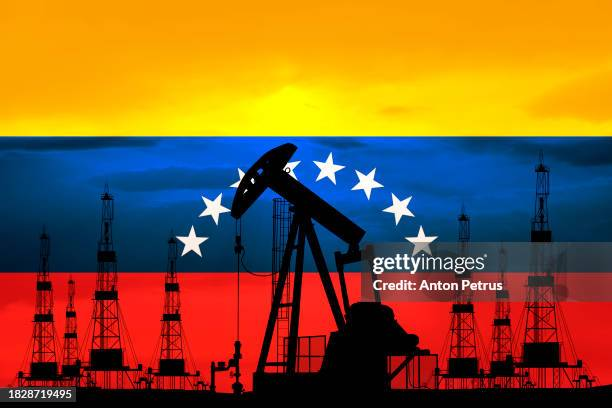
US special operations forces seized Venezuelan President Nicolás Maduro and his wife, Cilia Flores, in a nighttime operation to bring him to the United States to face a 2020 narco-terrorism indictment.
The removal of Maduro has immediately created a power vacuum in Venezuela, leading to massive market volatility in the energy sector as traders weigh the risk of civil war against a potential oil recovery.
The strike has been framed by the US as a blow against a “narco-state” and a strategic move to sever a critical Latin American artery for China, but it has drawn international backlash, with Russia and Cuba labeling it a violation of sovereignty.
The geopolitical landscape of the Western Hemisphere shifted violently Saturday morning. In a nighttime operation that mirrors the 1989 capture of Manuel Noriega, U.S. special operations forces—reportedly including the Army’s Delta Force—struck Caracas and seized Venezuelan President Nicolás Maduro and his wife, Cilia Flores.
President Donald Trump confirmed the capture on social media, describing it as a “large-scale strike” conducted alongside law enforcement.
Maduro is currently being flown to the United States to face a 2020 indictment in the Southern District of New York (SDNY) for narco-terrorism and cocaine importation conspiracy.
The sitting leader of the country with the world’s largest proven oil reserves is now in American custody.
For the energy markets, the immediate question isn’t necessarily about justice, but about the flow of 800,000 to 900,000 barrels of oil per day. Early assessments from state-run Petróleos de Venezuela S.A. (PDVSA) suggest that production and refining facilities remain intact, though the port of La Guaira has sustained “severe damage.”
Venezuela sits on roughly 300 billion barrels of oil… most of it trapped under a crumbling infrastructure that needs billions in Western capital to breathe again.
The Trump administration has framed this as a blow against a “narco-state,” but the underlying strategy leans heavily on the Monroe Doctrine.
By removing Maduro, Washington effectively severs a critical Latin American artery for China, which has been the primary buyer of Venezuelan crude in exchange for debt repayment.
Markets can expect to see a massive spike in market volatility as traders price in the risk of a Venezuelan civil war versus the potential for a “Chevron-led” recovery of the Orinoco Belt.
Legal Limbo and the Ghost of 1989
The legal authority for a direct strike on a sovereign head of state remains murky. While Attorney General Pam Bondi emphasized the criminal charges involving machine guns and destructive devices, Congress was notably left in the dark.
Sen. Mike Lee (R-Utah) has already questioned the constitutional justification for the strike in the absence of a formal declaration of war.
The U.S. is essentially betting that the “shock and awe” of Maduro’s removal will cause the Venezuelan military to fracture rather than fight.
If the military holds its loyalty to Interior Minister Diosdado Cabello or Vice President Delcy Rodríguez, the U.S. hasn’t just captured a “tyrant”… it has opened a theater of urban warfare on its own doorstep.
Global Markets Brace for the Aftershock
The reaction from the international community has been split along predictable, yet dangerous, lines. Russia and Cuba have already labeled the move an “unacceptable violation” of sovereignty and “state terrorism.”
Meanwhile, regional neighbors are panicking. Colombian President Gustavo Petro has deployed troops to the 2,000-kilometer border, anticipating a fresh wave of refugees or a spillover of military skirmishes.
Data from the International Energy Agency (IEA) has long highlighted Venezuela as the “wildcard” of global supply. If a transitional government friendly to Washington takes over, we could see the fastest return of “lost” barrels in history… assuming the power grid in Caracas doesn’t collapse entirely first.
The 11 a.m. press conference at Mar-a-Lago will likely dictate whether this is the end of a conflict or the beginning of a much larger one.
Oilprice.com