Saudi Oil Exports to China and India Set to Fall Amid War Disruptions


Nigeria to strengthen its position in global energy market as NNPCL forecasts increase output, despite supply challenges
The Nigerian National Petroleum Company Limited (NNPCL) has announced strides toward reasserting Nigeria’s position as a reliable global energy supplier, highlighting improved security, policy reforms, and growing investor trust in its oil and gas sector.
As reported by ‘ThisDay’, NNPCL emphasized that this repositioning comes amidst a volatile global energy landscape, exacerbated by the geopolitical tensions between the US, Israel, and Iran.
These tensions have disrupted vital oil infrastructure in the Middle East and prompted the closure of the Strait of Hormuz, a critical passageway for nearly 20 percent of global crude supplies.
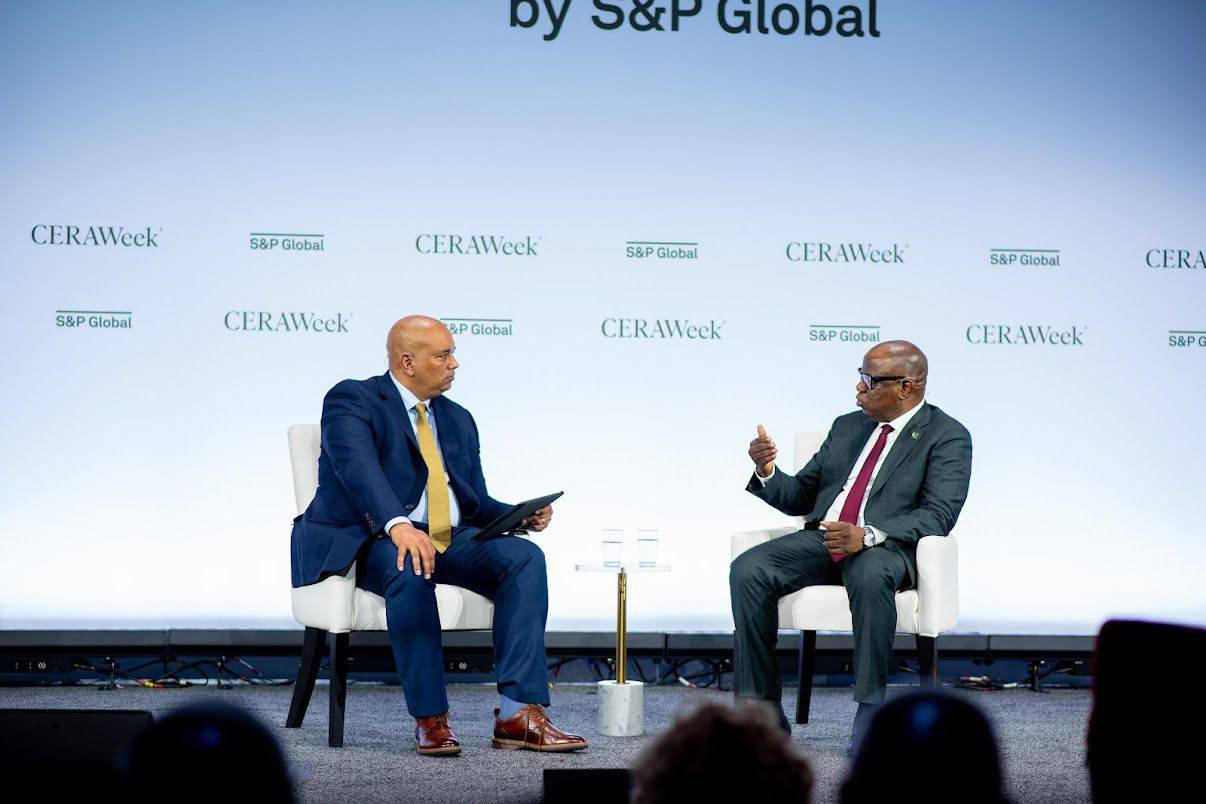
At CERAWeek 2026 in Houston, NNPCL’s Group Chief Executive Officer, Bayo Ojulari, discussed Nigeria’s resurgence during a fireside chat. He pointed to enhanced security in the Niger Delta and ongoing implementation of the Petroleum Industry Act reforms as key drivers behind the country’s strengthened energy sector. By capitalizing on these developments, Nigeria aims to rebuild its reputation as a key player in the global market.
Ojulari projected a slight rise in crude oil production, estimating an increase of around 100,000 barrels per day in the coming months. However, this figure still falls short of the federal government’s 2026 production target of 1.84 million barrels per day.
The NNPCL leader attributed recent progress to greater operational autonomy granted by President Bola Tinubu, which has enabled the company to adopt a more commercially sustainable approach and boost efficiency.
He revealed that nearly 100 percent operational pipeline availability has been achieved over the last year. This milestone is credited to strengthened cooperation between security forces and host communities, which has significantly reduced disruptions and improved production stability.
Ojulari stressed the importance of meticulous project execution in ensuring continued growth. He mentioned that NNPCL is currently implementing recommendations from a comprehensive portfolio review concluded last year while doubling down on partnerships with international oil companies to unlock further opportunities.
Renewed investor confidence was another major focus of Ojulari’s remarks. He highlighted several achievements, including resolutions to longstanding disputes such as those surrounding the ENI-operated OPL 245 block and commitments to large-scale projects like Shell’s $20 billion Bonga Southwest initiative. These developments signal a growing optimism among foreign investors about Nigeria’s energy sector.
Addressing domestic energy security, Ojulari praised the impact of the Dangote Refinery in mitigating exposure to global supply market fluctuations, cutting reliance on fuel imports, and offering a consistent channel for domestically extracted crude.
In broader infrastructure projects, he disclosed that the $5 billion NLNG Train 7 project is on track to be commissioned by year-end. Plans are also in motion to expand liquefied natural gas capacity with additional trains. With over 200 trillion cubic feet of proven gas reserves, Nigeria aims to leverage its gas potential both for domestic usage and export through major pipeline projects like the AKK and OB3.
Yet, challenges remain. Regulatory data from the Nigerian Upstream Petroleum Regulatory Commission revealed that production declined from an average of 1.63 million barrels per day in January to about 1.48 million barrels per day in February, culminating in a shortfall of approximately 16.6 million barrels over the two-month period. This underperformance signals significant difficulties in meeting fiscal targets despite planned production increases.
Ojulari candidly acknowledged these obstacles but underscored Nigeria’s strategic importance as a contributor to alleviating global supply challenges, even if it cannot rival the output levels of top producers like Saudi Arabia.
He explained that NNPCL’s long-term focus is pivoting from mere resource ownership to effective resource monetization. This involves prioritizing efficient project execution, fostering competitive fiscal policies, and deepening global partnerships.
CERAWeek 2026, hosted by S&P Global, has drawn over 10,000 energy leaders worldwide to explore the intersection of energy, technology, and geopolitics—a fitting platform for Nigeria to showcase its evolving energy ambitions.