Skip to content
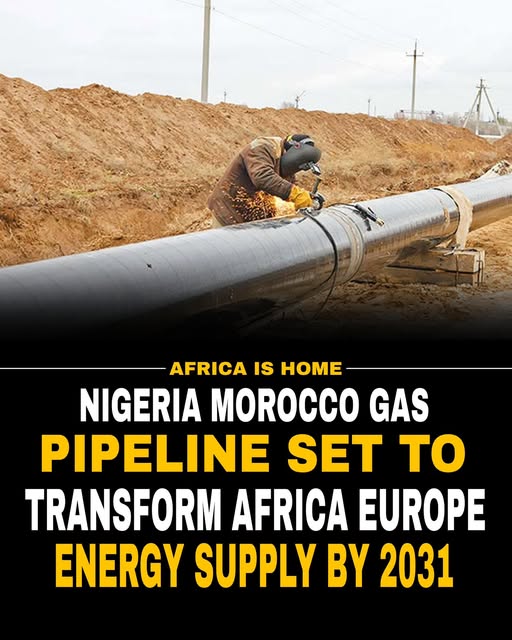
Nigeria and Morocco are aiming to finalize a major intergovernmental agreement in the fourth quarter of 2026 for the ambitious $26 billion African Atlantic Gas Pipeline.
This milestone accord, anticipated to be endorsed by Nigeria’s President Bola Tinubu and Morocco’s King Mohammed VI, will represent a crucial advancement in the long-awaited Nigeria-Morocco Gas Pipeline initiative, following the conclusion of preliminary technical evaluations.
The latest development followed a telephone conversation held weekend between Nigeria’s Minister of Foreign Affairs, Lady Bianca Odumegwu-Ojukwu, and Morocco’s Foreign Minister, Nasser Bourita, on advancing the ambitious energy infrastructure project.
Details of the discussions were contained in a statement issued by Nigeria’s foreign ministry.
Also known as the Nigeria-Morocco Pipeline, the project is designed to transport Nigerian natural gas through several West African coastal countries before reaching Morocco and ultimately connecting to European markets. The pipeline is projected to run approximately 6,900 kilometers offshore and onshore across the Atlantic corridor.
Estimated at between $25 billion and $26 billion, the project is expected to have a maximum annual transport capacity of about 30 billion cubic meters of natural gas.
According to Morocco’s National Office of Hydrocarbons and Mines (ONHYM), roughly 15 billion cubic meters of the planned capacity would help meet Morocco’s domestic energy requirements while also supporting exports to Europe.
The pipeline was first conceived nearly a decade ago as part of broader efforts to strengthen energy cooperation between West and North Africa. Since then, both countries have continued diplomatic and technical engagements aimed at advancing implementation plans for the massive infrastructure project.
Director-General of ONHYM, Amina Benkhadra, recently described the initiative as a strategic platform for deeper regional and international economic integration.
She had earlier indicated that discussions on the intergovernmental framework were progressing as both countries intensified consultations on technical, commercial and regulatory issues surrounding the project.
Energy analysts view the pipeline as a strategic effort to unlock greater value from Nigeria’s vast natural gas reserves, which rank among the largest in Africa.
Despite its huge reserves, Nigeria has struggled for decades to fully commercialize its gas resources because of infrastructure shortages, underinvestment and persistent security challenges affecting parts of the oil and gas sector.
For Morocco, the project forms part of a broader national strategy aimed at strengthening energy security and positioning the country as a critical energy and trade gateway between Africa and Europe.
In recent years, Morocco has expanded investments in renewable energy, gas infrastructure and regional connectivity projects to diversify energy supply sources and strengthen its role in transcontinental energy trade.
The proposed pipeline is also expected to deliver economic benefits to participating West African countries along the route by supplying gas for electricity generation, industrial development and manufacturing activities.
Stakeholders believe improved gas access could help address persistent energy shortages that continue to constrain industrialization and economic growth across parts of the region.
Analysts further note that the project could provide Europe with an alternative gas supply route at a time when many countries are seeking to diversify energy sources amid shifting geopolitical realities and global energy market disruptions.
Beyond discussions on the gas pipeline, officials from Nigeria and Morocco also explored opportunities for broader economic cooperation, particularly in fertilizer production and distribution.
Both countries emphasized the importance of strengthening collaboration in the fertilizer sector to support food security efforts across Africa as rising production costs and climate-related pressures continue to affect agricultural output.
The two sides also stressed the need to revive the Nigeria-Morocco Business Council as part of efforts to deepen bilateral trade and encourage greater private sector participation in cross-border investments.
Officials pointed to opportunities created under the African Continental Free Trade Area framework, which aims to expand intra-African trade and economic integration.
Nigeria and Morocco already maintain a bilateral taxation treaty, which both governments believe could further support investment flows and improve commercial relations between businesses in both countries.
Despite growing political backing for the project, industry experts caution that significant challenges remain before construction can begin. Financing arrangements, regulatory coordination among participating countries and long-term security considerations across the proposed route are expected to remain central issues in the execution of the project.
Nevertheless, the Nigeria-Morocco Gas Pipeline continues to be regarded as one of Africa’s most transformative energy initiatives, with the potential to reshape regional energy trade, expand gas access and strengthen economic ties between Africa and Europe once completed.