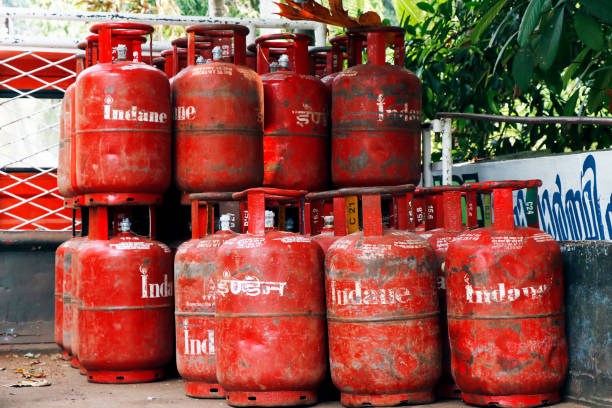
The Liquefied Petroleum Gas Retailers Association of Nigeria (LPGAR) has called on the Federal Government and other stakeholders to provide greater support for liquefied petroleum gas (LPG) retailers, especially those operating in rural communities.
The Chairman of the LPG branch of the Nigeria Union of Petroleum and Natural Gas Workers (NUPENG), Mr Ayobami Olarinoye, made the call in an interview on Thursday in Lagos.
He said government grants for retailers in rural and remote areas would help them expand their businesses and improve access to cooking gas in underserved communities.
“As a retailer, I will say the government and stakeholders need to encourage retailers. If the government can provide grants to retailers operating in rural areas, it will support them to expand their capacity,” he said.
Olarinoye also urged LPG plant owners and marketers to see retailers as partners rather than competitors, noting that retailers play a vital role in expanding LPG adoption across the country.
“Retailers are central to deepening the use of LPG, particularly in rural areas where establishing a gas plant may not be commercially viable,” he said.
Speaking on prices, Olarinoye said cooking gas remained slightly more expensive in rural and remote communities because of transportation and logistics costs, but stressed that the difference should not be substantial.
“The reality is that prices are dropping and supply has normalised. Almost all depots currently have products available,” he said.
According to him, retailers in the South-West buy LPG from plant owners at between ₦1,150 and ₦1,300 per kilogram, while consumers pay between ₦1,500 and ₦1,700 per kilogram, depending on location and logistics costs.
He said that in the South-South, including Port Harcourt and Warri, retailers purchase LPG at between ₦1,300 and ₦1,350 per kilogram and sell to consumers for ₦1,600 to ₦1,700 per kilogram.
In the South-East, particularly across the Anambra, Awka and Onitsha axis, he said retailers still buy LPG at about ₦1,400 per kilogram and sell at around ₦1,700 per kilogram.
Olarinoye added that in northern cities such as Kano and Kaduna, retailers buy LPG at an average of ₦1,300 per kilogram and sell at between ₦1,600 and ₦1,700 per kilogram, depending on location.
He said retailers in Abuja purchase LPG at an average of ₦1,300 per kilogram and sell to consumers at about ₦1,500 per kilogram within the Federal Capital Territory.
Olarinoye expressed optimism that prices would continue to decline, adding that the market currently enjoys a steady supply and relative stability.
“We sincerely look forward to a further drop in prices. I can confirm that there is a steady flow of supply and relative stability for now,” he said.