India Explores Gas Power Boost to Stabilize Grid During Peak Hours


Global electricity demand to rise at an average annual rate of 3.6% between 2026 and 2030
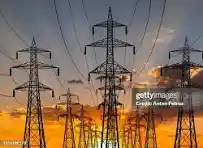
According to the latest report from the International Energy Agency(IEA). The global electricity demand is growing at a record rate and projected to grow at an average annual rate of 3.6 per cent between 2026 and 2030.

The report attributes this growth to rapid industrialization, the increasing adoption of electric vehicles, rising air conditioning needs, and the expansion of data centers driven by advancements in artificial intelligence.
Emerging economies are expected to account for approximately 80% of the increase in demand during this period.
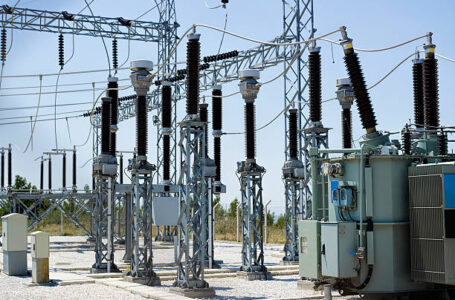
The demand surge is placing significant pressure on transmission and distribution networks, which are becoming critical bottlenecks in the global energy transition. With over 2,500 GW of generation, storage, and industrial projects awaiting grid connection worldwide, the IEA estimates that up to 1,600 GW could be connected in the short term through regulatory changes and technologies aimed at enhancing grid flexibility.
Annual investment in electricity grids currently stands at around $400 billion globally, but meeting future demand will necessitate a 50% increase in spending. BloombergNEF highlights that investment surpassed $470 billion in 2025, marking a 16% rise from 2024; however, this level is still insufficient to mitigate ongoing grid constraints.
Rising equipment costs, inflation, supply chain challenges, and labor shortages are further delaying network expansion efforts. In advanced economies, electricity consumption is recovering after years of stagnation.
The United States saw a growth rate of 2.1% in 2025 and is expected to maintain around 2% annual growth through 2030, largely driven by data center demand. Similarly, the European Union anticipates a 2% annual increase in consumption during this timeframe, while countries such as Japan, Canada, Australia, and South Korea are also experiencing renewed growth.
In Africa, the situation is more challenging, as fragmented and underdeveloped grids are struggling to keep pace with rapidly increasing solar, hydroelectric, and gas generation capacity. While investments in power generation infrastructure are growing, transmission systems remain inadequate to deliver electricity efficiently to industrial and urban centers.
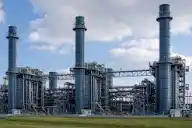
The IEA notes that scaling up grid investment is crucial for African nations that face financial limitations and weak inter-regional connections. Without substantial expansion of high-voltage lines and cross-border infrastructure, newly generated electricity risks going unused, hampering economic gains and slowing progress in industrialization and electrification.
Globally, modernizing transmission networks will play a pivotal role in integrating renewable energy sources, ensuring reliable power supply, and supporting broader industrial and digital advancements. For Africa in particular, achieving energy transition goals relies as heavily on developing robust transmission systems as it does on adding new generation capacity.