FG: Tinubu’s reform driving global confidence as Nigeria strengthens UK partnership


Behind the Rhetoric: The Ikeja Electric Hatchet Job That Doesn’t Hold Up
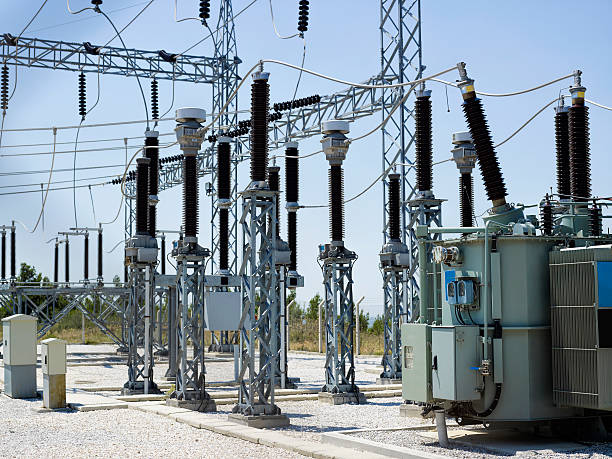
High voltage transformers in the cities.High voltage transformers in the cities.
By Gbenga Adeoti
Every electricity market with structural deficits eventually attracts anger. Nigeria’s power sector, shaped by decades of under-investment, regulatory distortion, energy theft, tariff misalignment, and gas supply instability, is no exception. What is surprising is not public frustration, but how easily that frustration can be weaponised into prose that abandons evidence, proportionality, and intellectual discipline.
The statement circulating under the banner of the so-called Nigerian Global Business Forum (NGBF), purporting to “name and shame” Ikeja Electric and its executives, is not a critique. It is a polemic. Worse, it is a classless feature that substitutes invective for analysis and hyperbole for fact.
A serious examination of electricity distribution in Nigeria must begin with an understanding of how the sector actually works. Distribution companies do not generate power. They do not control gas supply. They do not set tariffs unilaterally. They do not dispatch energy. Their role is limited, regulated, and structurally constrained within the Nigerian Electricity Supply Industry (NESI).
To attribute “sudden deaths”, “economic genocide”, or national de-industrialisation to a single distribution company is not only irresponsible, it is analytically dishonest.
Nigeria’s electricity crisis is systemic, not personal. Distribution companies operate at the tail end of a value chain plagued by chronic generation shortfalls, transmission bottlenecks, and a tariff framework that has historically failed to reflect cost. For years, DisCos were required to supply energy below cost while absorbing losses from energy theft, meter bypass, vandalism, and non-payment. These are not excuses; they are documented regulatory realities acknowledged repeatedly by the Nigerian Electricity Regulatory Commission (NERC), the World Bank, and successive administrations.
The write-up itself inadvertently undermines its own argument. It cites NERC figures showing that Ikeja Electric recorded a revenue efficiency of 74.55 percent and collected a significant share of sector revenues. Yet it fails to explain a basic fact: collection efficiency does not equate to service sufficiency when upstream supply is constrained. You cannot distribute what is not generated, and you cannot deliver stable voltage through a transmission network that routinely collapses under load.
Blaming DisCos for power surges without acknowledging transmission instability is akin to blaming a water tap for a dry reservoir.
Equally troubling is the deliberate conflation of regulation with exploitation. Tariffs in Nigeria are not imposed by DisCos. They are determined by NERC through tariff orders, service bands, and regulatory reviews that are subject to public consultation and government intervention. When tariffs are frozen for political reasons while inflation, FX costs, and gas prices rise, service quality inevitably deteriorates. That is an economic reality, not a moral failure.
The article’s descent into personal attacks on executives further strips it of credibility. The suggestion that academic background in insurance or finance disqualifies executives from leading complex infrastructure businesses betrays a shallow understanding of modern utilities management. Energy provision is not run by engineers alone. It is run by multidisciplinary teams spanning finance, operations, risk, safety, regulation, and capital markets. Globally, many successful utility leaders are not engineers, but strategists who know how to mobilise capital, manage risk, and navigate regulation.
Perhaps most revealing is the language. Phrases such as “heathen”, “fetish”, “genocide”, and “murderous bills” are not the vocabulary of reform. They are the language of provocation. Serious advocacy does not threaten visa bans and sanctions without evidence. It does not accuse companies of mass death without coronial data, judicial findings, or regulatory sanctions. It does not collapse complex social outcomes into moral theatre.
Nigeria’s electricity sector deserves reform, accountability, and improvement. Consumers deserve better service, better communication, and faster metering. Workers deserve safety, fair pay, and protection. These are legitimate concerns, and they are already the subject of ongoing regulatory action, recapitalisation efforts, metering interventions, and sector restructuring.
What the sector does not need is performative outrage disguised as analysis.
If the goal is reform, then the path forward lies in fixing generation liquidity, strengthening transmission infrastructure, enforcing energy theft laws, implementing cost-reflective tariffs with social protection, and accelerating metering, not in publishing incendiary essays that collapse under basic factual interrogation.
Criticism is healthy. Recklessness is not.
This write-up does not advance justice, consumer protection, or sector reform. It trivialises them. And in doing so, it exposes itself not as a serious intervention, but as a classless feature unworthy of the gravity of the issues it claims to address.
In fact, the outcome of my research on the source of the article confirms the position that it’s merely a poor PR job that should be disregarded in its entirety.
The article claims that the Nigerian Global Business Forum (NGBF) – was allegedly signed by Dr. Alaba Kalejaiye and Musa Ahmed.
The “Nigerian Global Business Forum (NGBF)” appears to be fabricated and there is zero credible evidence that this organization exists. There is absolutely no trace of an official NGBF website or digital presence nor does the association have registration records in Nigerian corporate or NGO registries
There has been no credible Nigerian or international news outlet that has reported on this organization outside of the single article on the fringe website that deserves no mention
In addition, the organization has no social media presence – No LinkedIn, Twitter, or Facebook presence for an organization claiming to represent “Nigerian professionals all over the world”
The article contains extreme, defamatory language without corroborating sources or independent verification; ultimately appearing like an advocacy/political attack piece rather than journalism
Finally, it is apparent the purveyors of this diatribe against Ikeja Electric failed to relieve that Nigerians can smell smear campaigns from a distance, particularly when they’re poorly executed by unschooled promoters masquerading as journalists. Those forwarding the defamatory article may want to think twice. The position of the Law is clear on this.
Gbenga Adeoti, a freelance journalist and public affairs analyst, writes in from Ikeja