U.S. Crude Daily Average Production Falls in December as Bakken Leads Pullback


Africa Solar Outlook 2026: AFSIA Reveals Africa as the World’s Fastest-Growing Solar Market
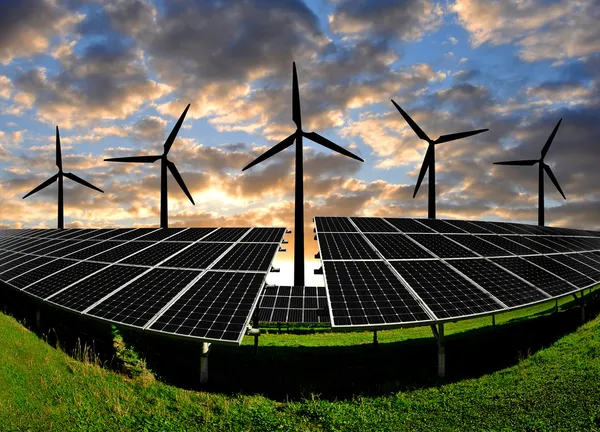
The Africa Solar Outlook 2026, published by the African Solar Industry Association (AFSIA), has revealed that Africa is now emerging as one of the fastest-growing solar markets in the world.
For a long time, Africa has been treated as a peripheral player in the global solar market but emerging trend now challenges that status with data, not rhetoric.
The report presents the most comprehensive assessment yet of solar energy deployment across Africa, and its central conclusion is that solar deployment on the continent has been consistently underestimated, but now the fastest-growing solar markets in the world.
What makes this edition particularly important is the methodology adopted. By combining verified, project-level data with international solar trade statistics, the Africa Solar Outlook 2026 offers a far more realistic picture of what is actually happening on the ground.
Globally, solar momentum remains strong. In 2025, the world added an estimated 544 to 660 GW of new solar capacity, the largest annual increase on record. Solar and wind together accounted for more electricity generation growth than the net increase in global demand, while renewables overtook coal in the global power mix for the first time. While debate continues over whether current growth is sufficient to meet 2030 climate targets, the direction of travel is clear: solar, increasingly paired with storage, is reshaping power systems worldwide.
AFSIA has been tracking Africa’s solar market since 2019, using a bottom-up approach, identifying projects individually across utility-scale, commercial and industrial, and distributed segments. By the end of 2025, this effort had documented over 42,000 solar projects, representing 296 GWp of cumulative capacity, with 23.4 GWp operational , amounting to a 26% increase year-on-year.
This 2026 Outlook however goes further by incorporating a top-down analysis using solar module export data from China, compiled by energy think tank Ember. Given that China accounts for around 90% of global solar module exports, this dataset provides a strong proxy for installed capacity that may not yet be formally captured in project databases.
The implication of this report is significant. While 23.4 GWp of operational capacity can be uniquely identified, export data suggest that as much as 63.9 GWp of solar capacity may already have been installed across Africa. In effect, solar deployment on the continent could be nearly three times higher than previously assumed.
Africa Solar Outlook: Key Trends and Insights
This recalibration lifts Africa’s share of global solar capacity from below 1% to approximately 2.5 to 3%, fundamentally altering how the continent should be viewed in global energy transition discussions.
Growth rates tell an equally compelling story. In 2025, Africa recorded the highest year-on-year solar growth rate of any region globally, alongside China and the Middle East, and outpaced both in relative terms. Since the post-COVID period, Africa ranks among the top three fastest-growing solar regions worldwide.
A critical enabler of this growth is energy storage. The Africa Solar Outlook 2026 highlights how falling battery costs are transforming solar from an intermittent resource into a dispatchable power solution. The report estimates that converting daytime solar into fully dispatchable electricity using storage now costs around USD 33/MWh, delivering 24-hour solar power at roughly USD 76/MWh, which is competitive and often cheaper than, new fossil fuel generation in many African markets.
Across the continent, solar-plus-storage systems are increasingly displacing diesel, supporting industrial loads, and strengthening weak grids. What was once considered technically or commercially unviable is now becoming mainstream.
Importantly, the report also moves beyond headline megawatts. By tracking solar capacity per capita and solar’s share of national electricity generation, it highlights progress in smaller and emerging markets alongside larger economies.
The 2026 Africa Solar Outlook signals that Africa’s solar transition is not a future promise but one that is already happening. And as costs continue to fall and investment deepens, the continent’s role in the global solar market is set to grow faster than many still expect.