Skip to content
Leadership is not about having all the answers or projecting absolute certainty. Instead, it revolves around the ability to navigate complexity, embrace ambiguity, and guide others through uncertain situations.
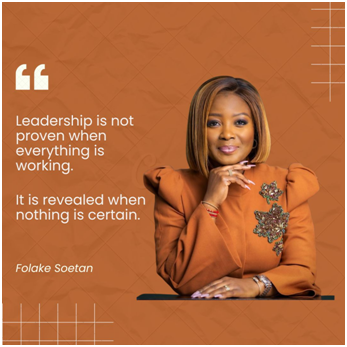
True leadership is grounded in fostering trust, encouraging collaboration, and remaining adaptable amid changing circumstances. It’s about balancing confidence with humility and the willingness to learn along the way.
One of the biggest misconceptions about leadership is that experience removes uncertainty. The higher you rise, the less certainty you have. You simply become more comfortable making decisions without having all the answers.
There will always be incomplete information, competing priorities, and pressure to move faster. The true responsibility of leadership is creating trust when the path ahead is unclear.
The leaders who leave the deepest impact are rarely the most visible people in the room.. They are the ones who create environments where others can do their best work consistently
This kind of leadership may not appear immediately in quarterly reports. But over time, it becomes visible in retention, resilience, innovation, and culture. Leadership continues to humble and teach me.
Comments supporting Folake’s statement… much more extensively.
OLUWAFEMI OSOBADE-Insightful! As a contractor, I relate to the idea that leadership is revealed in uncertainty. In project delivery, success isn’t just about execution when everything is clear. It’s about building trust, solving problems, and maintaining standards even when conditions change. Great leadership creates the environment where teams, partners, and contractors can deliver excellence consistently. That’s the kind of partnership we strive to support, one built on trust, accountability, and long-term impact. Thank you for sharing this perspective.
OLABANJO ALIMI – True. However, sometimes when things are going right is exactly when leadership must prove itself most. That is often when the “Kodak moment” begins to set in… the dangerous assumption that “oh… we’ve figured everything out… everything is working well, so there’s nothing to worry about.”
When operations run smoothly, it can actually be a signal to look harder for hidden latency, creeping complacency, and areas where the organisation may be losing its edge. Strong leaders do not just respond to disruption; they anticipate it, push the envelope, and are willing to self-disrupt when necessary.
I do not disagree with the views expressed. But I think they can sometimes diminish the hard, intelligent and deliberate work leadership requires even when things are working well. Some may even argue that staying at the top is harder than getting there in the first place. Sustaining success without becoming comfortable is equally a difficult form of leadership.